
How to Rank a Website on Google in 2026
Introduction
Ranking a website on Google is one of the most important goals for bloggers, businesses, and digital marketers.
However, website ranking is not only about publishing content. Instead, it requires proper SEO strategies, high-quality content, keyword optimization, and technical improvement.
If you want to grow your traffic and improve visibility, this guide will help you understand how to rank a website effectively in 2026.
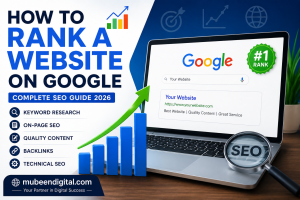
Understand how Google Ranking works
Before improving ranking, you must understand how Google works. Search engines analyze websites based on:
- Content quality
- User experience
- Website speed
- Backlinks
- SEO optimization
Therefore, websites with better optimization and valuable content usually rank higher.
Do Proper Keyword Research
Keyword research is the foundation of SEO.
Choose the Right Keywords
Target keywords that have:
Use Long-Tail Keywords
Long-tail keywords are easier to rank for.
For example:
- How to rank a website fast
- How to rank a website on Google
As a result, your chances of ranking improve faster
Create High-Quality Content
Content remains one of the strongest ranking factors.
Write Helpful Content
Your article should:
- solve user problems
- Provide accurate information
- Be easy to read
Use Proper Heading Structure
Use:
- H1 for title
- H2 for main sections
- H3 for subtopic
Consequently, search engines can understand your content better.
Optimize On-page SEO
On-page SEO helps search engines understand your webpage.
Important On-page SEO Elements
- SEO title
- Meta description
- Focus Keyword
- Internal links
In addition, use your keyword naturally throughout the article.
Improve website Speed
Website speed directly affects rankings.
Tips to Improve Speeds
- Compress images
- Use lightweight themes
- Enable caching
- Reduce unnecessary plugins
As a result, users stay longer on your website.
Make Your Website Mobile-Friendly
Most users browse websites using mobile devices. Therefore, Google prioritizes mobile-friendly websites.
Best Practices Practices
- Responsive design
- Fast mobile loading
- Easy navigation
Build High-Quality Backlinks
Backlinks are one of the strongest ranking signals.
Ways to Get Baclinks
- Guest posting
- Directory submissions
- High-quality blog comments
- Shareable content
However, avoid spammy backlinks, as they can harm your rankings.
Focus on Technical SEO
Technical SEO ensures that search engines can crawl and index your website properly.
Technical SEO Checklist
- XMK sitemap
- Robots.txt optimization
- HTTPS security
- Fix broken links
- Optimize Core Web Vitals
Use SEO Tools
SEO tools help analyze and improve website performance.
Recommended SEO Tools
These tools help monitor rankings, keywords, and backlinks.
Improve User Experience
Google values websites that provide a better user experience.
Important UX Factors
- Easy navigation
- Clean design
- Fast loading
- Readable content
Therefore, improving UX can increase both rankings and conversions.
Updating Content Regularly
Fresh content performs better in search results
Update Old Articles
- Add new information
- Improve SEO
- Fix outdated links
- Optimize readability
As a result, Google sees your website as active and relevant.
Be Patient and Consistent
SEO takes time. Most websites do not rank overnight.
Consistency Matters
- Publish content regularly
- Build backlinks gradually
- Monitor analytics
- Improve strategy continuously
Eventually, your website authority will grow.
Conclusion
In conclusion, learning how to rank a website requires patience, strategy, and consistency. By focusing on keyword research, high-quality content, on-page SEO, backlinks, and technical optimization, you can significantly improve your search ranking.
Moreover, using the right SEO tools and continuously updating your website will help you stay ahead of competitors. If you consistently follow SEO best practices, your website can achieve long-term growth and higher visibility on Google.